The Next Era of Design Is Agentic. And Your AI Already Wants to Create
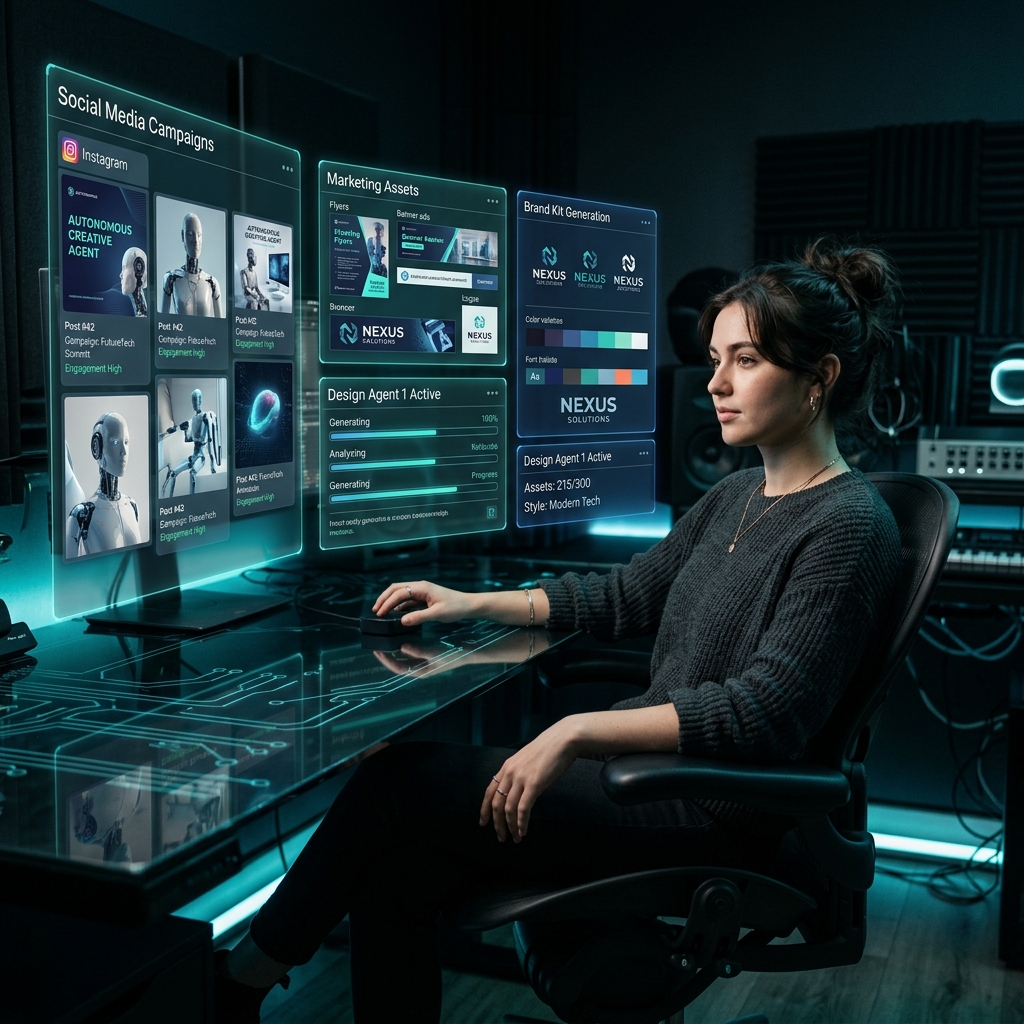
Something fundamental shifted in 2026. Not in how designs are created, but in who requests them.
For decades, the design workflow looked the same: a human opens a tool, creates a brief, and waits for output. Whether that output came from Photoshop, Figma, Canva, or an AI generator, the human was always the initiator.
That's ending.
AI agents are becoming the primary requesters of design. Not humans opening apps, autonomous software agents that monitor calendars, analyze data, detect opportunities, and execute creative decisions on your behalf.
The question isn't whether this shift is happening. It's whether your design infrastructure is ready for it.
The Shift: From Human-Initiated to Agent-Initiated Design
Consider what's already happening in marketing teams:
The old workflow:
- Marketing manager checks calendar → notices upcoming product launch
- Opens Slack → messages designer with brief
- Designer opens Figma → creates concepts
- Back-and-forth → 3-5 revision cycles
- Export → upload to scheduling tool
- Schedule post → done
Time: 2-5 days. Humans involved: 2-3.
The agentic workflow:
- AI agent monitors CRM → detects product launch next Tuesday
- Agent calls design API → generates Instagram carousel + LinkedIn banner + email header
- Agent calls scheduling API → posts queued across platforms
- Human reviews dashboard → approves or tweaks
Time: 30 seconds. Humans involved: 1 (reviewer, not creator).
This isn't science fiction. It's what teams running agentic workflows with MCP-connected design tools are doing right now.
Why Agents Need Design (More Than Humans Do)
Here's the counterintuitive truth: AI agents have a greater need for automated design than humans do.
A human can open Canva, pick a template, and spend 20 minutes making something passable. It's not ideal, but it works.
An AI agent can't do that. It can write code, query databases, send emails, manage calendars, but the moment it needs a visual asset, it hits a wall. Design is the last major capability gap in agentic workflows.
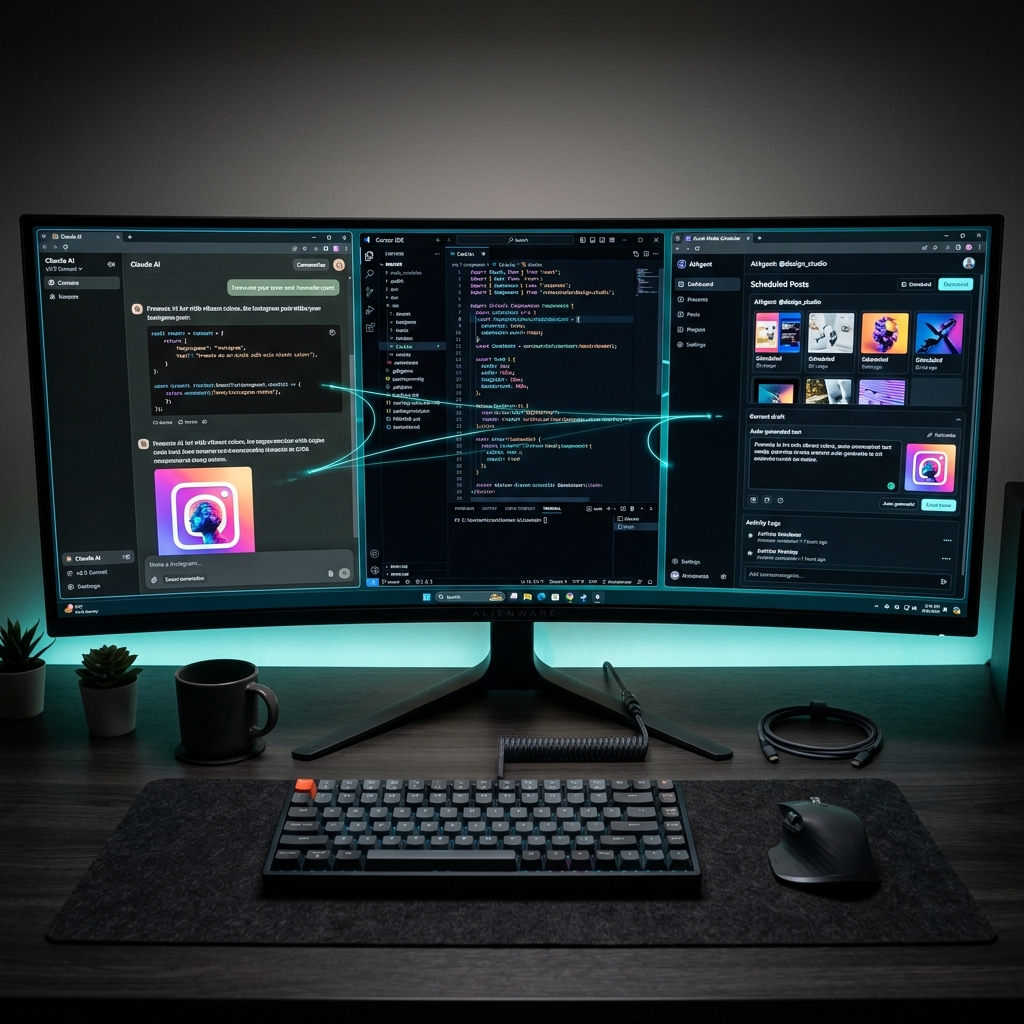
Think about what an AI agent typically handles in a modern business:
| Capability | Agent Can Do It? |
|---|---|
| Write and send emails | ✅ |
| Update CRM records | ✅ |
| Analyze data and create reports | ✅ |
| Schedule meetings | ✅ |
| Write blog post drafts | ✅ |
| Generate code | ✅ |
| Create a social media graphic | ❌ |
| Design an email header | ❌ |
| Build a presentation deck | ❌ |
| Generate brand-consistent marketing materials | ❌ |
See the pattern? Everything text-based and data-based is automated. Everything visual is still a manual bottleneck.
Agents don't just want design access. They need it to complete their jobs.
The Protocol That Makes It Possible: MCP
Model Context Protocol (MCP) is what makes agentic design real. Created by Anthropic, MCP is an open standard that lets AI agents connect to external tools through a unified interface.
Think of it as USB-C for AI, one protocol, any tool.
┌─────────────┐     MCP      ┌──────────────┐
│  AI Agent   │ ◄──────────► │  Tool Server │
│ (Claude,    │   JSON-RPC   │  (Design,    │
│  Cursor,    │              │   CRM,       │
│  ChatGPT)   │              │   anything)  │
└─────────────┘              └──────────────┘
Before MCP, every tool integration required custom code. Your agent needed a different library for each service, different authentication flows, different data formats. Building a design-aware agent meant months of integration work.
With MCP, an agent discovers available tools at runtime, understands their parameters through schemas, and calls them through standard JSON-RPC. The agent doesn't need to know how design works internally, it just needs to express what it wants.
What "Agentic-Friendly" Design Actually Looks Like
Not every design platform can serve AI agents. Most were built for humans clicking through GUIs. Making a design platform truly agentic-friendly requires rethinking the entire interaction model.
1. Programmatic Access to Everything
Agents can't click buttons. Every design operation, creating a request, setting brand parameters, choosing formats, downloading outputs, must be callable via API or MCP tool.
2. Brand Context as Data
When a human designer works on a project, they "just know" the brand colors, fonts, and tone. An agent doesn't. Brand guidelines need to be queryable as structured data:
{
  "brandId": "brand_acme_corp",
  "colors": {
    "primary": "#1A5F4B",
    "secondary": "#00D4AA",
    "accent": "#FF6B35"
  },
  "fonts": {
    "heading": "Figtree",
    "body": "Inter"
  },
  "tone": "Professional but approachable",
  "logoUrl": "https://cdn.example.com/logo.svg"
}
The agent reads this once, then every design it requests follows these rules. Brand consistency becomes programmatic, not hopeful.
3. Campaign-Level Thinking
Human-initiated design is usually one asset at a time. Agentic design works in campaigns, 10, 20, 50 related assets created in a single orchestrated batch.
An agent might think: "Product launch next week. I need: 1 Instagram carousel (6 slides), 1 LinkedIn banner, 3 Story graphics, 2 email headers, and 1 Facebook event cover. All in brand. All cohesive."
That's one instruction, seven design outputs, zero manual work.
4. Status and Polling
AI-generated designs return in seconds. Human-polished designs take hours. An agentic platform needs clean async patterns, polling endpoints, webhooks, status callbacks, so agents can fire-and-forget or wait-and-retry intelligently.
5. Credit-Aware Execution
Agents need to know their resource limits before executing. A well-designed agentic platform exposes credit balance checks so the agent can plan batch operations without hitting unexpected limits mid-execution.
How Meepo Built for the Agentic Era
We saw this shift coming. While other design platforms were optimizing their GUIs, we were building infrastructure for agents.
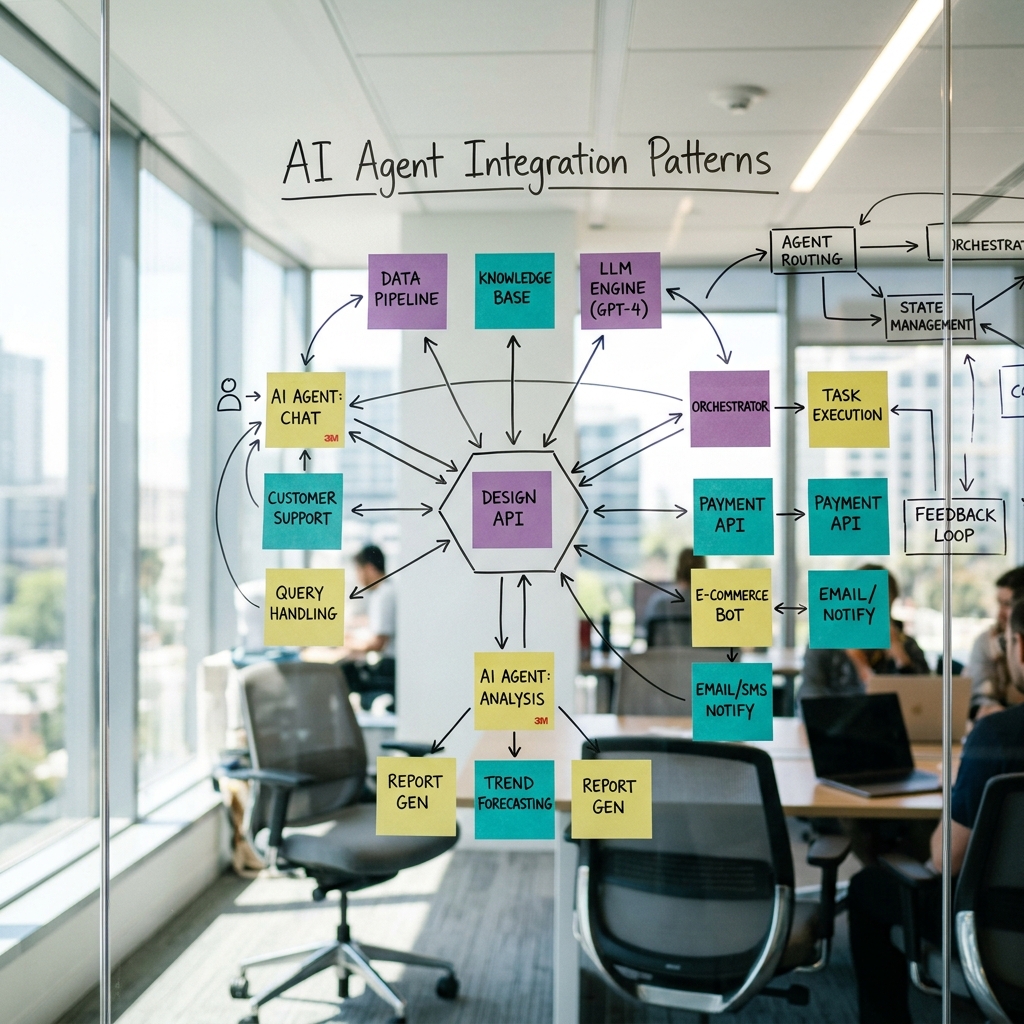
Multiple Entry Points, Same Design Engine
Meepo doesn't just support MCP. We built multiple integration pathways because agents live in different environments:
| Integration | How Agents Use It | Best For |
|---|---|---|
| MCP Server | Claude, ChatGPT, Cursor, Windsurf, Gemini CLI connect directly | Coding agents, autonomous workflows |
| Slack Bot | Request designs from any Slack channel | Team communication workflows |
| REST API | Custom integrations, cron jobs, CI/CD pipelines | Enterprise automation |
| Web Studio | Human review, polish, and approval | Quality control layer |
The key insight: agents don't all speak the same language. Some use MCP. Some trigger via Slack messages. Some call REST endpoints from scheduled scripts. A truly agentic platform meets agents where they are.
Cloud-Hosted MCP. Zero Installation
Most MCP servers require local installation, download a package, configure environment variables, manage dependencies. That's a friction point for adoption.
Meepo's MCP server is cloud-hosted at a single URL:
https://meepo-mcp-server.meepo.app/mcp
Add this URL to your agent's MCP configuration. That's it. No npm install, no Docker containers, no environment variables. First connection triggers OAuth login, then the session is cached.
Compatible with: Claude, ChatGPT, Cursor, Windsurf, Manus, Gemini CLI, and any MCP-compliant agent.
24 Tools Across 7 Categories
The Meepo MCP server exposes a comprehensive tool surface:
- Brand Management, list, get, update brand profiles
- Campaign Management, create, manage, delete campaigns
- Design Requests, create designs, manage chat threads
- Messages & Interactions, send follow-ups, generate captions, request variants
- Generated Images & Templates, list outputs, browse templates
- Video, create projects, trigger video generation
- Credits & Subscription, check balance, view plan details
This isn't a toy integration. It's a full-featured design platform accessible through natural language.
Real Agent Conversations
Here's what agentic design looks like in practice:
Prompt to Claude:
"Create a Ramadan campaign for Brand X with 5 Instagram posts, teaser, countdown, special offer, family package, and Eid greeting. Use 1:1 ratio."
What the agent does:
- Calls
brand_get→ loads Brand X colors, fonts, logo - Calls
campaign_create→ creates "Ramadan 2026" campaign - Calls
chat_create× 5 → generates each post with campaign context - Calls
generation_list→ retrieves all generated image URLs - Returns summary to user with preview links
Total time: ~90 seconds. Total manual effort: typing the prompt.
Prompt to Cursor (while coding):
"I just finished the landing page. Generate a social media announcement with a screenshot of the hero section. Use our startup's brand."
The agent calls Meepo MCP, generates the announcement graphic using the brand profile, and returns the download link, all without leaving the IDE.
The Agentic Design Stack: What's Coming Next
The agentic design era is just beginning. Here's where it's heading:
Phase 1: Agent-Requested Design (Now)
Agents call design APIs to generate assets on demand. Human reviews and approves. This is where most teams start.
Phase 2: Agent-Orchestrated Campaigns (2026-2027)
Agents plan entire content calendars, generate all assets, schedule posts, and monitor performance. Humans set strategy and review anomalies.
Phase 3: Agent-Optimized Creative (2027+)
Agents A/B test design variants automatically, measure engagement, and iterate on creative direction without human input. The agent becomes a creative partner, not just an executor.
Phase 4: Agent-to-Agent Design Commerce (Future)
Your marketing agent commissions design from a specialized design agent. Payment, delivery, and quality assurance happen between agents. Humans set budgets and approve strategies.
Why Most Design Tools Aren't Ready
The gap between agent-friendly and agent-hostile design platforms is enormous:
| Capability | Agent-Friendly (Meepo) | Traditional Design Tools |
|---|---|---|
| Programmatic access | Full API + MCP | Manual GUI only |
| Brand context as data | Structured, queryable | PDF guidelines |
| Campaign generation | Batch creation via API | One-at-a-time manual |
| Multi-platform output | Auto-adapted ratios | Manual resize each |
| Credit/resource awareness | Real-time balance API | No programmatic access |
| Authentication | OAuth + cached sessions | Username/password GUI |
| Agent discovery | MCP tool schemas | N/A |
Design tools built for the GUI era can't serve agents. They need to be rebuilt from the ground up, or replaced by platforms that were built for agents from day one.
How to Start Building Agentic Design Workflows
Step 1: Choose Your Agent
Pick any MCP-compatible AI agent. Claude, ChatGPT, Cursor, Windsurf, and Gemini CLI all work.
Step 2: Connect Meepo MCP
Add the MCP server URL to your agent's configuration. Full setup guide here →
Step 3: Set Up Your Brand Profile
Log into Meepo Studio, create a brand with your colors, fonts, logo, and tone of voice.
Step 4: Start Small
Ask your agent to generate one Instagram post. See how it reads your brand, generates concepts, and returns results. Build confidence before automating entire campaigns.
Step 5: Scale to Campaigns
Once comfortable, try campaign-level prompts: "Create a 2-week product launch campaign with daily social posts across Instagram, LinkedIn, and Facebook."
Step 6: Add to Your Automation Stack
Connect Meepo to your existing workflows. Zapier, Make, custom scripts. Let agents trigger design as part of larger business processes.
The Bottom Line
The next era of design isn't about better Figma plugins or smarter Canva templates. It's about who requests design, and increasingly, that's not a human clicking buttons. It's an AI agent executing a workflow.
Design platforms that only work through GUIs will become the fax machines of creative tools. The platforms that win will be the ones agents can talk to natively.
At Meepo, we built for this future from day one:
- MCP server with 24 tools for any MCP-compatible agent
- Slack integration for team-based agent workflows
- REST API for custom automation
- Cloud-hosted, zero installation, one URL
- Brand-aware, every output follows your brand rules automatically
The agentic era of design is here. The question isn't whether to adopt it, it's how fast you can start.
Ready to make your AI agent a designer? Connect Meepo MCP, 24 design tools, cloud-hosted, works with Claude, ChatGPT, Cursor, Windsurf, and Gemini CLI. Start free →
Ready to automate your design workflow?
Try Mosea free. AI generates designs instantly, human designers polish to agency quality.
Start Free